
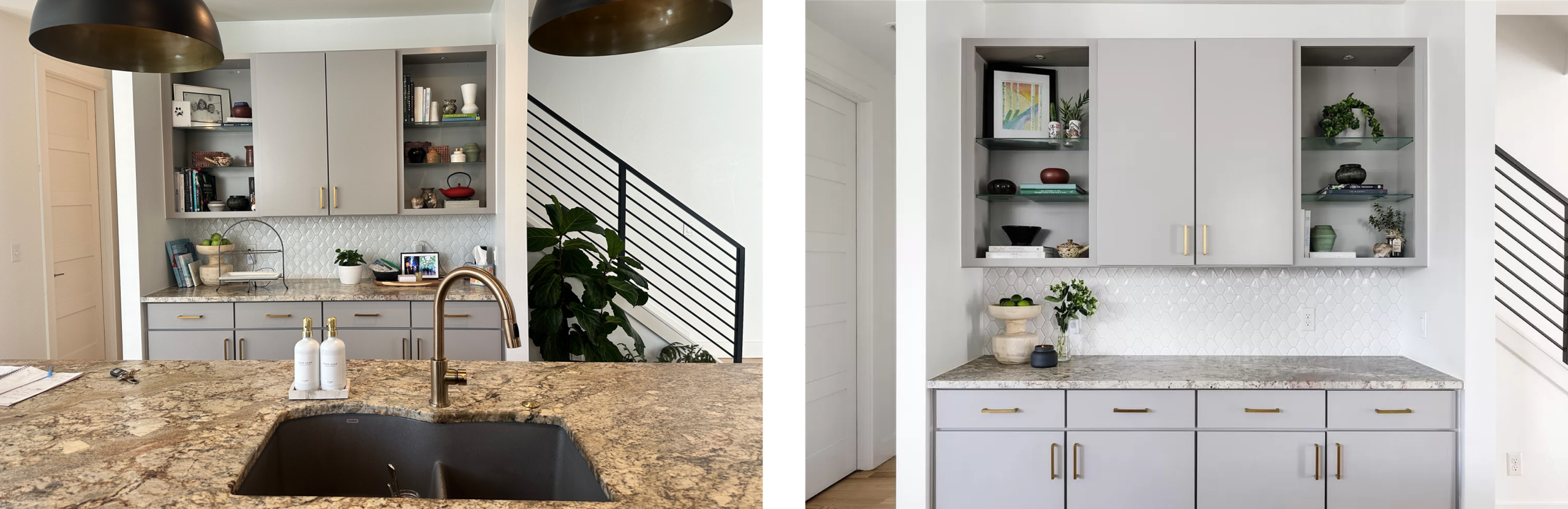
If you’re selling a home in Denver this year, you’re not selling into the same market you would have in 2022. Inventory is up. Days on market are longer. Buyers have options — and they’re using them. The homes that still sell quickly and at full asking price almost all share one thing in common: they show better than the competition. That’s where home staging stops being a design choice and starts being a financial decision.
This guide breaks down what home staging actually costs in Denver in 2026, what the return on that investment looks like with real numbers, and how to figure out whether staging makes sense for your specific property.
Quick Answer: What Does Home Staging Cost in Denver?
Professional home staging in Denver typically costs between $2,000 and $8,000 for a full-service stage, with most single-family homes landing in the $3,500 to $6,000 range. That investment represents roughly 1% to 2% of the median Denver home price (about $599,000 in 2026), and the documented return on staging is 5% to 15% in higher sale price — often netting sellers between $30,000 and $90,000 on a typical Denver home.
Why Staging Matters More in Denver’s 2026 Market
Denver’s housing market in 2026 looks different from the frenzy of recent years. According to recent market data from REcolorado and the Denver Metro Association of Realtors, several things have shifted:
- Active inventory is up to roughly 13,400 listings across the metro, giving buyers significantly more choices than during peak seller’s market conditions.
- Months of supply has climbed to about 3.2 months — the highest level in years, signaling a more balanced market where buyers have real negotiating power.
- Average days on market has stretched to roughly 47–56 days across the metro, depending on segment and source.
- Sale-to-list ratio has slipped slightly from prior peaks, with sellers more often making concessions or accepting offers below asking.
- The median home price sits around $585,000 to $630,000, relatively flat year-over-year.
Translation: well-priced, well-presented homes still sell quickly. Everything else sits. In a soft or balanced market, the gap between staged and unstaged performance widens — which is exactly why professional staging is more valuable in 2026 than it was in 2021.
What the Data Actually Says About Home Staging ROI
Home staging isn’t a feel-good investment. It’s a measurable one. Here’s what the most-cited industry research shows:
- Sale price uplift: National Association of Realtors (NAR) data consistently shows staged homes sell for 5% to 15% more than comparable unstaged homes. On a $600,000 Denver home, that’s $30,000 to $90,000 in additional sale price.
- Days on market: Staged homes spend roughly 30% to 73% less time on the market. Real Estate Staging Association data shows vacant homes that get professionally staged sell up to 88% faster than vacant homes that don’t.
- Buyer visualization: 81% of buyers’ agents say staging makes it easier for clients to picture the home as their own — directly improving the odds of an offer.
- Online performance: 96% of buyers start their search online. Staged homes photograph significantly better, get more clicks, and generate more in-person showings than empty or cluttered listings.
- ROI: Industry research puts the average return at 5x to 10x the staging investment. Some case studies document returns of 15x or more.
- Cost of delay: Each additional week a home sits on the market reduces the eventual sale price by roughly 1.2%. Homes that go more than 30 days unstaged rarely recover their original pricing power.
How Much Does Home Staging Cost in Denver in 2026?
Pricing varies based on home size, whether the property is vacant or occupied, and how long the staging needs to remain in place. Here’s a realistic breakdown for the Denver market:
| Property Type | Typical Staging Cost | % of Home Price |
| Condo / Townhome (1-2 BR) | $1,800 – $3,500 | 0.5% – 1% |
| Single-Family (3 BR) | $3,500 – $5,500 | 0.7% – 1.2% |
| Single-Family (4+ BR) | $5,000 – $8,500 | 1% – 1.5% |
| Luxury Home ($1M+) | $8,000 – $20,000+ | 1% – 2% |
| Occupied Home Consultation | $300 – $750 | n/a |
These ranges assume a standard 30- to 60-day staging period. Most Denver staging companies extend monthly if the home is still on the market, typically at a reduced rate.
What’s Included in a Professional Stage
A professional home stage in Denver typically includes:
- Initial consultation and design plan for the property
- Furniture rental and delivery (sofas, beds, dining sets, accent pieces)
- Art, lamps, rugs, and decorative accessories
- Linens, throw pillows, and styling details
- Installation by a professional design team
- Tear-down and removal at the end of the staging period
- Coordination with photographers, real estate agents, and showings
Higher-end packages may also include light handyman work, paint color consultation, room-by-room layout guidance, and pre-listing photo styling. For occupied homes (where the seller is still living in the property), staging often takes the form of a consultation: the designer works with what you already own and recommends targeted changes, additions, or removals.
The Math: What Staging Actually Earns You in Denver
It’s easy to look at a $5,000 staging quote and assume it’s expensive. The real question is what happens if you don’t stage. Here are two realistic scenarios on the same Denver property a $600,000 single-family home in a desirable neighborhood, in the 2026 market.
Scenario A — Unstaged
- Listed at $600,000
- Sits on the market for 60+ days
- First price reduction of 3% after 30 days = $18,000 cut
- Final sale at $575,000 (96% of original asking)
- Carrying costs over 60 days: mortgage, taxes, utilities ≈ $4,000–$6,000
- Net outcome: Roughly $29,000–$31,000 lower than expected
Scenario B — Professionally Staged
- Staging investment: $5,000
- Listed at $600,000
- Sells in 14–21 days
- Final sale at $605,000–$625,000 (full asking or slightly over)
- Carrying costs minimized due to fast sale
- Net outcome: Roughly $25,000–$45,000 better than the unstaged scenario, after deducting the staging cost
This is not theoretical math. It’s the documented pattern across thousands of staged-versus-unstaged transactions in markets like Denver where buyers have real choices.
When Staging Makes the Biggest Difference
Staging has the highest ROI in specific situations. If your property checks any of these boxes, the financial case for professional staging is strongest:
Vacant Properties
Empty rooms photograph poorly, feel cold, and make it difficult for buyers to gauge scale. Vacant homes statistically take 30%–50% longer to sell than staged ones. This is the highest-impact use case for professional staging.
Homes With Dated or Mismatched Décor
Your furniture may be comfortable, but if it dates the home, buyers will mentally subtract from your asking price. Staging resets the visual tone and lets the architecture and layout speak for itself.
Homes Above $500,000
The higher the price point, the higher the buyer’s expectations. In the Denver market, buyers looking above $500K expect move-in-ready presentation. Staging stops being a differentiator and becomes a baseline expectation, especially above $1 million.
Competitive Submarkets
When buyers can choose from 5, 10, or 20 similar listings in a neighborhood, presentation becomes the tiebreaker. The home that shows better wins. In neighborhoods like Wash Park, Cherry Creek, LoHi, and parts of Highlands Ranch, staging is what separates the homes that sell from the ones that linger.
Flips and Investor Properties
For flippers, every week on the market is a hit to the bottom line. Carrying costs on a flip — interest payments, taxes, utilities, insurance — eat into the margin faster than most expect. Staging an investor property is one of the simplest ways to protect the deal’s projected return.
Which Rooms Actually Move the Needle?
You don’t need to stage every room. According to NAR data, the rooms that influence buyers most are, in order:
- Living room: 37% of buyers say this is the most important room to stage. It sets the tone for the entire showing.
- Primary bedroom: 34% of buyers cite this as critical. A well-staged bedroom helps buyers picture themselves living there.
- Kitchen: 23% of buyers point to kitchen presentation. Even simple touches — fresh fruit, coordinated linens, clean countertops — change the perception of the space.
- Dining room and outdoor spaces: Help buyers visualize entertaining and lifestyle.
A professional Denver home stager will tell you which rooms in your specific property need the most attention — and which ones you can leave alone.
Common Denver Home Staging Mistakes to Avoid
- Staging too late. Every week a home sits unstaged reduces the eventual sale price by roughly 1.2%. Stage before listing, not after price drops.
- DIY-ing what should be professional. Decluttering and cleaning are valuable. Trying to recreate a designer-quality interior with Facebook Marketplace furniture usually photographs worse than empty rooms.
- Staging only the obvious rooms. Buyers notice when one room is beautifully presented and the next is a junk pile. Consistency matters.
- Over-personalizing. Family photos, religious items, hobby gear, and bold personal style all make it harder for buyers to imagine themselves in the home. Neutralize, don’t sanitize.
- Ignoring exterior and entry. First impressions form in the first 8 seconds. Curb appeal and entryway styling are often what determines whether a buyer schedules a second showing.
Frequently Asked Questions About Home Staging in Denver
Is home staging worth it in Denver in 2026?
In most cases, yes. Denver’s market has shifted toward a more balanced — and in some segments, buyer-friendly — environment. Inventory is up, days on market are longer, and buyers are being more selective. In that environment, professionally staged homes consistently sell faster and for more money than unstaged ones, with documented returns of 5x to 10x the staging investment.
How much does it cost to stage a house in Denver?
Most professional home staging in Denver costs between $2,000 and $8,000, depending on home size, vacant versus occupied status, and the length of the staging period. Luxury properties or longer staging windows can run higher. Occupied home consultations (where the stager works with what you already own) typically range from $300 to $750.
Who pays for home staging — the seller or the agent?
Most often, the seller pays. Some real estate agents include staging in their listing service or offer to front the cost in exchange for reimbursement at closing, particularly for higher-priced listings. Always confirm in writing before signing a listing agreement.
Do I need to stage every room?
No. The highest-impact rooms are the living room, primary bedroom, kitchen, and dining room. A good Denver home stager will help you prioritize where to invest based on your specific property, target buyer, and budget.
Is virtual staging a good alternative to professional staging?
Virtual staging is cheaper and works well for online photos, but it can backfire in person. Buyers who fall in love with the online photos and then walk into an empty home often feel misled. Virtual staging is best used for vacant homes where physical staging is impossible — not as a substitute for the in-person experience.
How long does staging take to set up?
A professional installation typically takes one to two days from delivery to completion. Most Denver staging companies need a week or two of lead time to design the plan, source furniture, and schedule installation, so book early — ideally before the listing photos are taken.
Stage to Sell Faster, for More
Whether you’re selling your primary home, flipping a property, or listing a client’s home as a Denver real estate agent, the financial case for professional staging in 2026 is stronger than it has been in years. The difference between a property that sells in 14 days at asking and one that sits for 60 days and gets reduced twice is, more often than not, presentation.
ELEVATE specializes in strategic home staging in Denver and the surrounding metro area. Our designs are built around how Denver buyers actually shop with attention to architecture, light, scale, and the emotional cues that drive offers. Our staging is intentional: every choice is made to support your sale price and shorten your time on market.
Schedule a free staging consultation at elevatestr.com/contact-us to get a custom staging plan for your property and a clear estimate of what staging would cost and earn you in today’s Denver market.

