
Starting an Airbnb in Denver is not as simple as furnishing a property and listing it online. The city has clear short-term rental regulations, and understanding them before launch is critical.
Many new hosts delay compliance until after listing their property. That mistake can result in fines, listing removal, or forced shutdown. This guide explains everything you need to know about Denver Airbnb license requirements, including eligibility, application steps, fees, and ongoing compliance.
Does Denver Allow Short-Term Rentals?
Yes but only under specific conditions.
Denver allows short-term rentals if the property is your primary residence. This is the most important rule and the one that causes the most confusion for new hosts.
If the property is not your primary residence, it does not qualify for a short-term rental license in Denver.
What Is Considered a Primary Residence in Denver?
To qualify for a Denver short term rental license, the property must be:
-
Your primary residence
-
Where you live the majority of the year
-
The address listed on your driver’s license and tax documents
The city may request documentation to verify residency. This requirement prevents investors from operating multiple non-owner-occupied short-term rentals within city limits.
Do You Need a License to List on Airbnb in Denver?
Yes. A valid short term rental permit in Denver is required before listing your property on Airbnb, VRBO, or similar platforms.
Operating without a license can result in:
-
Fines
-
Platform removal
-
Legal penalties
The license number must be displayed on your listing once approved.
Step-by-Step: How to Get an Airbnb License in Denver
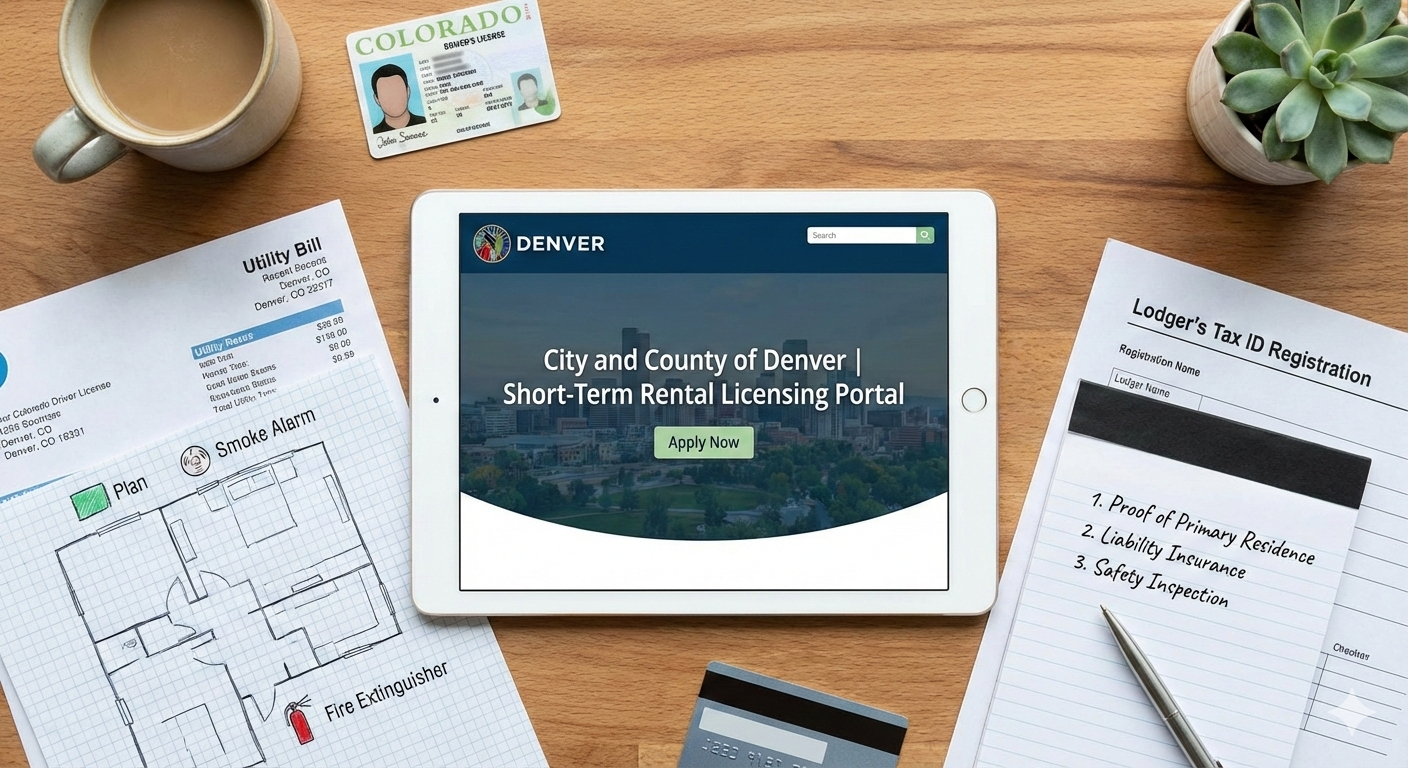
Here is the general process for obtaining a Denver short term rental license:
1. Confirm Primary Residence Eligibility
Ensure the property qualifies under Denver’s primary residence rule.
2. Prepare Required Documentation
Typical documentation includes:
-
Proof of primary residency
-
Government-issued ID
-
Liability insurance documentation
-
Property details
3. Complete the Online Application
Applications are submitted through the City and County of Denver licensing system.
4. Pay Required Fees
There is an application fee and an annual renewal fee.
5. Wait for Approval
Processing times can vary depending on demand and application accuracy.
Once approved, you will receive a license number that must be included on all listings.
Insurance Requirements for Denver STRs
Denver requires short-term rental operators to maintain liability insurance coverage.
This protects:
-
The host
-
Guests
-
The property
Standard homeowner insurance policies may not be sufficient. Many hosts use specialized STR insurance policies that cover guest-related risks.
Renewal and Ongoing Compliance
A Denver short term rental license is not permanent. It must be renewed annually.
Ongoing compliance includes:
-
Maintaining primary residence status
-
Keeping insurance active
-
Updating license information if changes occur
Failure to renew can result in suspension.
What Happens If You Violate Denver STR Regulations?
Denver actively enforces short-term rental regulations.
Common violations include:
-
Operating without a license
-
Renting a non-primary residence
-
Failing to display license numbers
-
Ignoring renewal deadlines
Penalties can include fines and license revocation.
Common Mistakes New Denver Hosts Make
Many new hosts underestimate regulatory complexity. Common mistakes include:
-
Assuming investment properties qualify
-
Applying with incomplete documentation
-
Listing before approval
-
Not understanding insurance requirements
These mistakes delay launch and can affect long-term performance.
Why Proper Licensing Should Be Handled Before Setup
Licensing impacts more than compliance it affects your entire launch timeline.
Before furnishing or photographing the property, you should:
-
Confirm eligibility
-
Begin application process
-
Ensure documentation is accurate
Launching prematurely can lead to unnecessary costs if licensing is denied.
How Licensing Connects to Turnkey STR Setup
Compliance is one part of launching a profitable short-term rental in Denver. A successful launch also requires:
-
Market-aligned design
-
Strategic furnishing
-
Professional listing creation
-
Operational systems
-
Guest communication processes
When licensing, setup, and operational planning are handled together, the launch is smoother and the property is positioned for stronger early performance.
Final Thoughts
Denver’s short-term rental regulations are clear but strict. Understanding and following the city’s Airbnb license requirements is the first step toward building a sustainable and compliant rental business.
Before investing in furnishings, photography, or listing creation, ensure your property qualifies and your license application is properly prepared. Compliance protects your investment and sets the foundation for long-term success.

